Regresar

Researching the Human Layer of an Intelligent World

HH HUMAN investigates how artificial intelligence is changing human agency, formation, authority and responsibility.

Our research begins where technological capability alone cannot provide the answer: what should humans delegate, what requires legitimate human authority, and how should people and institutions develop for an increasingly intelligent world?

Cognitive Abundance

Artificial intelligence is reducing the scarcity of capabilities that once required significant human expertise, time and access.

HH HUMAN studies what happens when analysis, prediction, explanation, generation and other cognitive functions become increasingly abundant.

Our central question is:

What becomes scarce when intelligence becomes abundant?

This research area examines changing sources of human value, economic complementarity, scarcity displacement and the institutional consequences of increasingly available artificial cognition.

Human Authority & Responsible Delegation

Artificial intelligence allows organizations to delegate more analysis, recommendations, communication and execution.

But greater capability creates a governance problem:

Who has the legitimate authority to decide, intervene, create exceptions and remain accountable?

This research area examines meaningful human oversight, decision rights, mandate, intervention, accountability and the difference between genuine human authority and ceremonial presence.

Human-to-Human Formation

Human development involves more than transferring information.

People also learn through relationship, example, recognition, correction, responsibility and shared experience.

HH HUMAN studies which dimensions of formation are meaningfully relational and how artificial intelligence may strengthen, weaken or transform Human-to-Human development.

A central distinction guides this work:

Information ≠ Formation

The objective is not to assume that technology cannot participate in formation, but to identify when another human being remains an important part of the developmental process.

Developmental Agency in the Age of AI

Children growing up today will have continuous access to systems capable of explaining, solving, remembering, generating and advising.

This creates a developmental question with long-term consequences:

What should young people learn to do independently before learning to delegate it?

HH HUMAN investigates how persistent cognitive assistance may affect agency, judgment, intellectual humility, responsibility and the ability to recognize when delegation is appropriate.

This research area provides the foundation for our principle:

Formation Before Delegation

Governance Under Radical Observability

Artificial intelligence is expanding not only what systems can generate, but also what institutions may be able to infer about human beings.

Language, behavior, preferences, relationships and patterns can increasingly become observable or predictable.

HH HUMAN studies the governance implications of this shift through two distinctions:

Knowledge ≠ Permission

The ability to know or infer something does not automatically create a legitimate right to use it.

Thought ≠ Action

Inferences about internal states should not automatically be treated as equivalent to behavior.

This research area examines privacy, autonomy, contextual use of information, legitimacy and institutional limits under increasingly powerful inference systems.

Where We Study the Human Layer

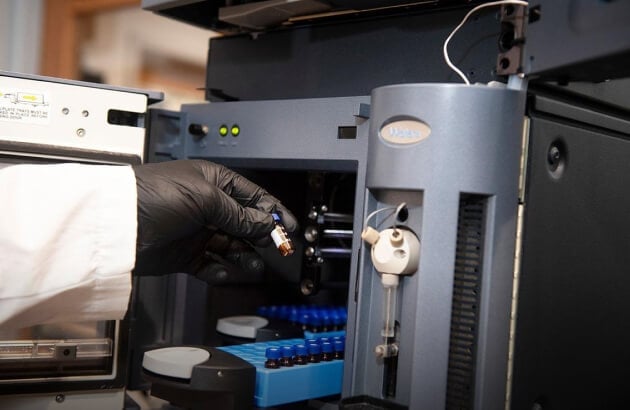
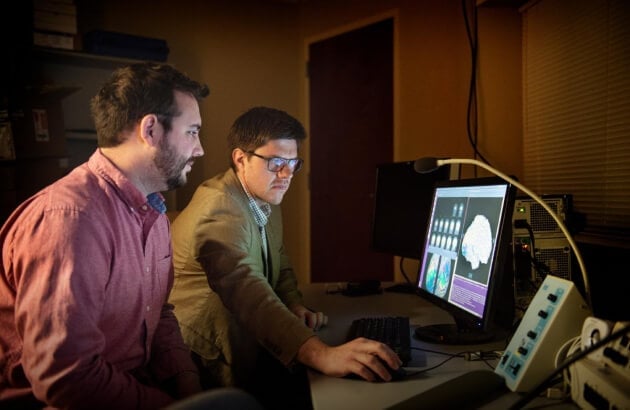
Human agency and authority are not abstract problems. They emerge in real relationships and institutions.

Building an Open Research Program

HH HUMAN is developing research that can be examined, challenged and extended by others.

HH HUMAN does not treat its foundational ideas as conclusions that must be protected from criticism.

Our aim is to distinguish normative principles, conceptual propositions and falsifiable hypotheses, and to develop evidence capable of strengthening, revising or challenging the framework.

research-box3.jpg
HH HUMAN is developing conceptual and empirical work on Human-to-Human formation, LVH Theory, human authority and responsible delegation. Working papers will be published here as the research program develops.
VIEW RESEARCH NOTES →
research-box4.jpg
We welcome conversations with researchers, universities, laboratories and institutions interested in studying human agency, formation, authority and responsibility in the age of artificial intelligence.
PROPOSE A COLLABORATION →

A Theory Should Be Able to Face Evidence

HH HUMAN is not being built as a doctrine that explains every possible future.

It is being developed as an open intellectual program: one whose assumptions can be identified, whose propositions can be challenged and whose empirical claims can be tested.

The objective is not to prove that humans must remain at the center of every process.

The objective is to understand where human formation, authority and responsibility remain consequential—and why.


FROM THE BOOK

A Civilization of Human Guarantors What must remain governable when increasingly capable systems perform more of the work?